
The AI Miracle Bet: Big Tech's Reckless Spending Hits a Fiscal Wall

AI-generated image · Bay Street Wire
As Alphabet, Amazon, and Meta burn through cash to fund an infrastructure arms race, investors are starting to question if the returns will ever justify the debt.
For years, Wall Street treated the massive capital expenditures of Big Tech as a badge of confidence. Now, that enthusiasm is curdling into anxiety. We are witnessing a reckless gamble where the world's largest companies are betting on an AI miracle to justify spending that is actively eroding their financial health.
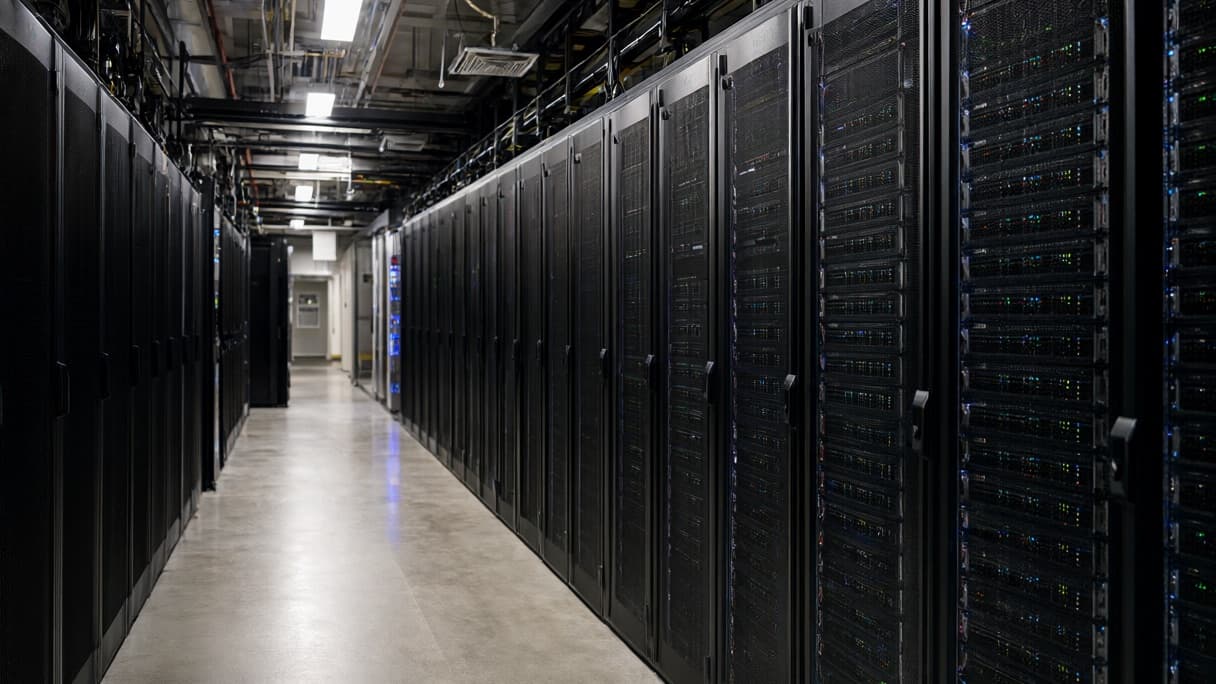
As TechCrunch first reported, Alphabet, Amazon, Meta, and Microsoft have indicated they intend to spend over $740 billion on capital expenditures this year. This spending spree—focused on chips and data centers—is creating a precarious fiscal reality. The red flags are now impossible to ignore: mounting debt, plummeting stock prices, and a disturbing trend of negative free cash flow.
Alphabet provides the most sobering case study. TechCrunch reports that Google's parent company saw its search advertising business—the engine that funds its empire—slow to 12% growth, its weakest pace in five quarters. This decline coincides with the rollout of AI Mode, an AI-powered chatbot integrated into Search. In essence, Alphabet is spending billions on technology that may be cannibalizing its own primary revenue stream. The result? Alphabet reported a third-quarter negative free cash flow of $9.1 billion, marking two consecutive quarters in the red, even as quarterly capex climbed to $51.4 billion. Alphabet expects total spending to reach $205 billion this year and anticipates further increases in 2027.
Amazon is facing a similar crisis. TechCrunch notes that Amazon reported negative free cash flow of $42.4 billion over the last 12 months, a staggering reversal from the $14.8 billion in positive cash flow it saw the year prior. Despite a 39% growth rate in its AWS cloud business, the company expects to spend $220 billion in capex this year.
Meta is not far behind. The company posted negative free cash flow of $2.1 billion for the third quarter. While ad revenue grew 26%, CEO Mark Zuckerberg has described the company's new free personal AI agent, Muse, as a "money pit" due to its compute-intensive nature. Meta's current guidance points toward capex as high as $145 billion this year.
Microsoft appears to be the outlier, reporting $18.6 billion in positive free cash flow during its most recent quarter. However, its capex of $45.2 billion was lower than its $50 billion projection, a shortfall Microsoft attributed to third-party capacity delays rather than a strategic pullback.
Crucially, this infrastructure isn't being funded solely by profits. S&P Global Market Intelligence reports that in 2026, a combined $326 billion in debt was raised by Microsoft, Alphabet, Amazon, Meta, and Oracle—triple the volume of the previous year.
This volatility is already rippling through the broader market. TechCrunch reports that the Nasdaq fell 2.9% on a single Friday, with chip stocks like Nvidia (down 4%), Broadcom (down over 5%), and Qualcomm (down 11%) taking a drubbing. Alphabet suffered its worst day on record on a Thursday, wiping out $500 billion in market value.
Even the next generation of AI is feeling the squeeze. As Anthropic prepares for its IPO, the Financial Times reports (via TechCrunch) that Blackstone has warned investors the company may not qualify for an investment-grade rating, potentially leaving it dependent on third parties and hyperscalers to fund its compute needs.
Big Tech is no longer just investing in the future; it is mortgaging its present on the hope that AI will eventually pay the bills. The question is whether the miracle arrives before the cash runs out.