
Scaling Down: Can DropGenie's Microfluidics Solve the Rare Sample Bottleneck?

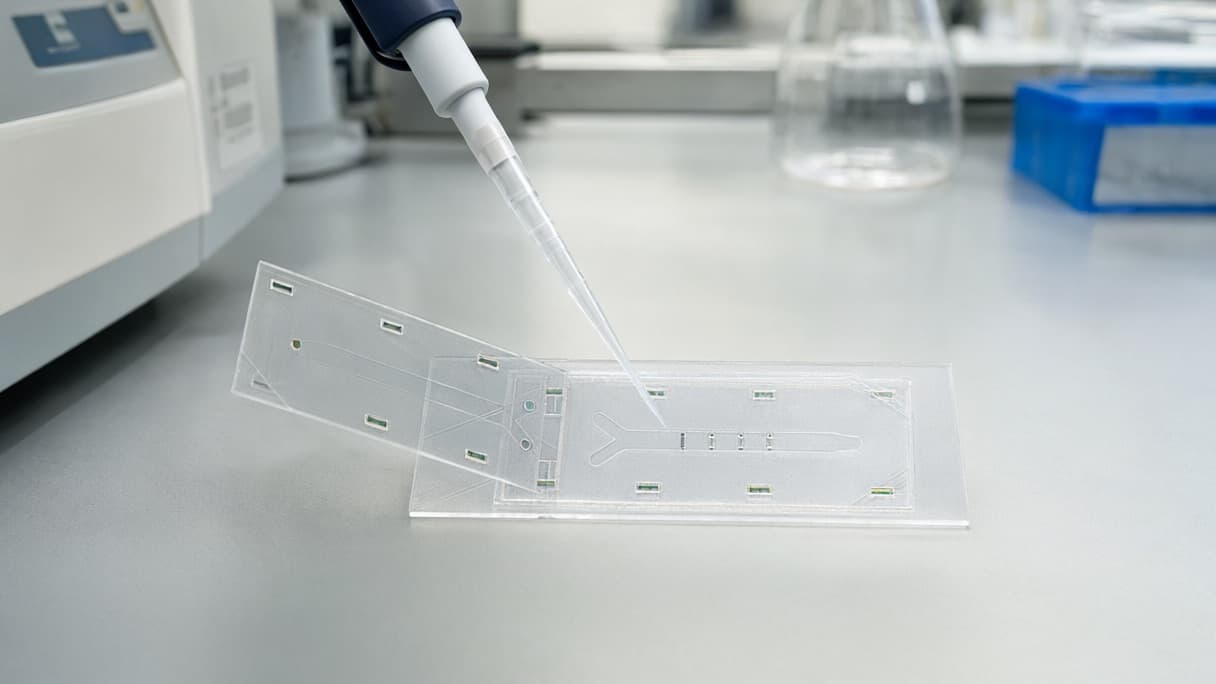
AI-generated image · Bay Street Wire
The Montreal-based startup claims its chip-based gene editing requires 100 times less material than traditional methods, but commercial viability hinges on moving from 'artisanal' lab work to automated service.
In the high-stakes world of drug discovery, the most significant bottleneck isn't always the brilliance of the hypothesis, but the scarcity of the material. For researchers targeting personalized medicine, the amount of patient-derived biological material is finite, often forcing PhD students into what CEO Alison Hirukawa describes to BetaKit as "extremely artisanal" manual labor.
DropGenie is betting that the solution to this constraint isn't more material, but smaller volumes, as BetaKit first reported. The company's core mechanism relies on a digital microfluidics platform that utilizes electrical signals to manipulate minute amounts of liquid. By scaling samples "down into a droplet," the company aims to perform complex lab tasks on a single small chip rather than transporting samples across various machines.
According to reporting from BetaKit, the company's primary value proposition is efficiency. DropGenie claims its chip-based gene editing process requires up to 100 times fewer cells and 100 times less volume than existing methods. Beyond the biological samples, this miniaturization reduces the need for expensive, bespoke reagents, which Hirukawa notes "completely changes the cost profile" of the experiments.
Whether this represents a genuine technical leap or a sophisticated pitch for capital is a question the company is currently answering through its partnerships. DropGenie has already aligned with pharmaceutical giants AbbVie and UCB Pharma, as well as instrument companies Sartorius and Danaher. Furthermore, BDC Thrive Fund managing director Mona Minhas suggested to BetaKit that the technology could serve as a critical data pipeline for AI-driven drug discovery by generating the high-quality, human-relevant data these models require.
To fuel this commercialization, DropGenie recently closed a $5 million USD ($7 million CAD) seed-plus equity round. The financing was led by Skeleton Key and included the Merck Global Health Innovation Fund, CQDM, Real Ventures, Anges Québec, and BDC Capital’s Thrive Fund.
***
**Opinion:** While the 100x reduction in material is a compelling metric, the real test for DropGenie will be the transition from a research tool to a scalable service. The company intends to launch its automated lab workflows as a service in the second quarter of next year. The success of this model depends on whether these "unsexy" automation systems can truly replace the artisanal nature of early-stage discovery without sacrificing the precision required for clinical breakthroughs.