
Paper Promises: The Systemic Collapse of Canada's Munitions Readiness

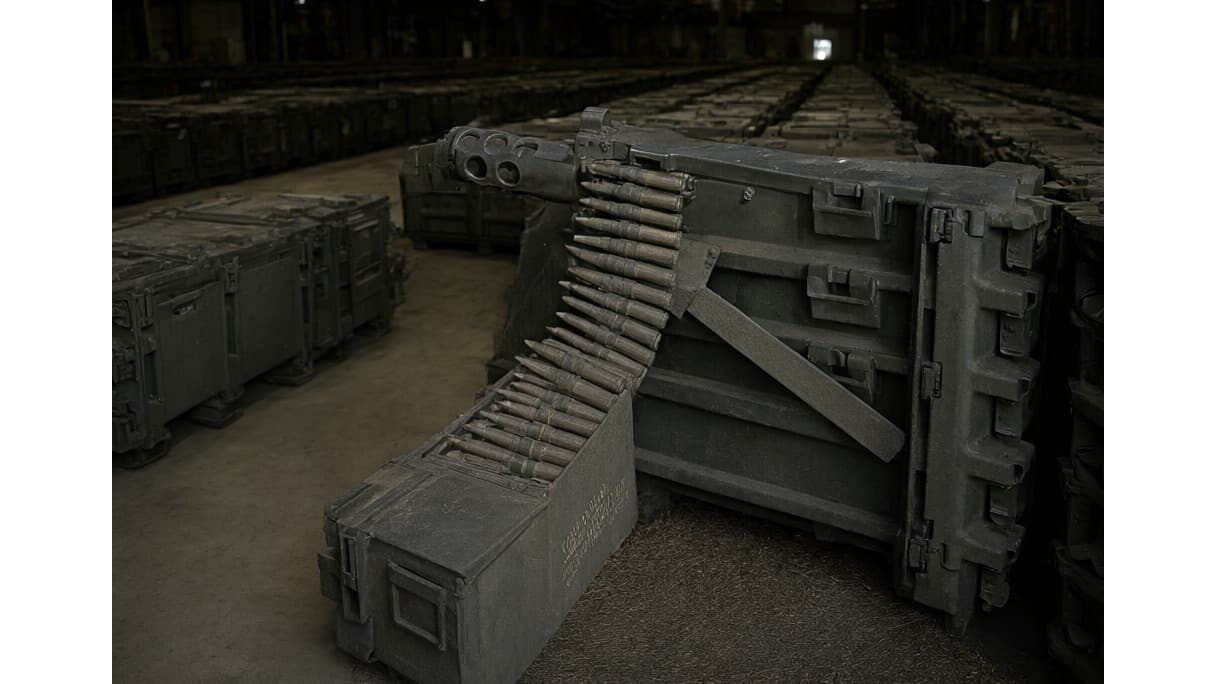
AI-generated image · Bay Street Wire
A scathing Auditor General's report reveals that bureaucratic inertia and procurement failures have left Canada's strategic ammunition stockpiles unable to meet NATO commitments, turning national security pledges into hollow rhetoric.
### ANALYSIS: The Procurement Void
For years, Ottawa has spoken the language of global leadership and strategic readiness. However, as CBC News first reported, a devastating new audit by Auditor General Karen Hogan reveals that beneath the diplomatic rhetoric lies a systemic collapse of military readiness. The finding is stark: Canada's strategic ammunition stockpile is currently incapable of supporting war readiness or fulfilling the nation's commitments to the North Atlantic Treaty Organization (NATO).
This is not merely a bureaucratic glitch or a series of unfortunate delays. It is a fundamental failure of the state to provide the basic tools of defense. According to reporting by CBC News, the Auditor General's report, tabled on Thursday, October 29, 2026, identifies a dual failure of leadership. The Department of National Defence (DND) has failed to manage its ammunition to meet both regular use and strategic stockpile requirements, while Public Services and Procurement Canada has been characterized as slow in its efforts to restock these critical supplies.
### The NATO Gap
The implications of these shortages are not confined to domestic ledgers; they threaten Canada's standing on the world stage. The audit notes that as of March 2026, the DND determined that the Canadian Armed Forces' readiness level to meet NATO commitments was "well below target." Ammunition was cited as one of the primary capability shortfalls, specifically within the strategic stockpile.
This failure is particularly glaring given the timing. The audit was released on the same day federal officials unveiled a new national security strategy, which explicitly warned that Canada must prepare for all contingencies, including the possibility of war. There is a profound disconnect between a strategy that prepares for war and a procurement system that cannot ensure the military has the ammunition required to fight one.
### A Culture of Sluggishness
The Auditor General's investigation into the procurement mechanism reveals a pattern of inefficiency. In reviewing 15 regular-use ammunition contracts, Hogan found that it took an average of nearly 19 months from the moment a contract was signed to final delivery. Even more concerning is the lack of accountability within the process; CBC News reports that Public Services and Procurement Canada failed to consistently document or track the reasons why contracts were modified to extend delivery dates.
Furthermore, the military's inability to utilize the supplies it does possess points to a broader decay of readiness. The audit found that the military used only about half of its allocated ammunition. While the DND did not track or explain these failures, Hogan suggested that cancelled or limited training activities were the likely cause. The audit specifically noted that as of March 2026, critical equipment—including ships and tanks—was frequently out of service, rendering them unavailable for the exercises and training necessary to maintain a combat-ready force. Other contributing factors may have included poor environmental conditions or a lack of personnel.
### The Industrial Vacuum
The current crisis is the culmination of long-term neglect. Three years ago, former chief of the defence staff, retired general Wayne Eyre, raised alarms about the critical state of Canada's ammunition supply. Appearing before a House of Commons committee, Eyre warned that Canada's domestic industrial capacity to regenerate rockets, artillery pieces, and ammunition was largely non-existent. He noted that when Canada began providing military aid to Ukraine, it did so from "pretty empty" shelves.
Eyre's most chilling assessment compared Canada's capacity to modern warfare, warning that Canada would exhaust much of its current stock within days if the military consumed ammunition at the rates observed in the war in Ukraine. At the time of his warning, no new production lines had been established to mitigate this risk.
### The Cost of Recovery
Ottawa is now attempting to buy its way out of a crisis that was allowed to fester. In 2024, the federal government pledged $9.2 billion over 13 years to replenish the strategic stockpile. More recently, in March 2026, the government released a $1.4-billion framework intended to rapidly scale up domestic production. This plan includes a $305-million investment in IMT Precision in Ingersoll, Ontario, and nearly $1 billion allocated to General Dynamics Ordnance and Tactical Systems in Quebec for the production of artillery rounds.
However, money alone cannot instantly erase years of neglect. The Auditor General's report concludes that despite these funding pledges and the awarding of some contracts, it will take several years to close the critical capability gaps.
Defence Minister David McGuinty has stated that increasing the ammunition supply is a top priority, telling reporters that the government "accepts and embraces" the Auditor General's recommendations and is already acting on most of them. Meanwhile, Conservative Opposition defence critic James Bezan has characterized the situation as "unacceptable," arguing that the failure is not an insurmountable problem, but rather a question of "political will."
Until those gaps are closed, Canada's commitments to its allies remain theoretical. A military without ammunition is a military in name only, and a national security strategy that ignores the basic requirements of the stockpile is nothing more than a paper promise.