
The Stainless Steel Failure: Why the Cybertruck Was Always a Sculpture, Not a Vehicle

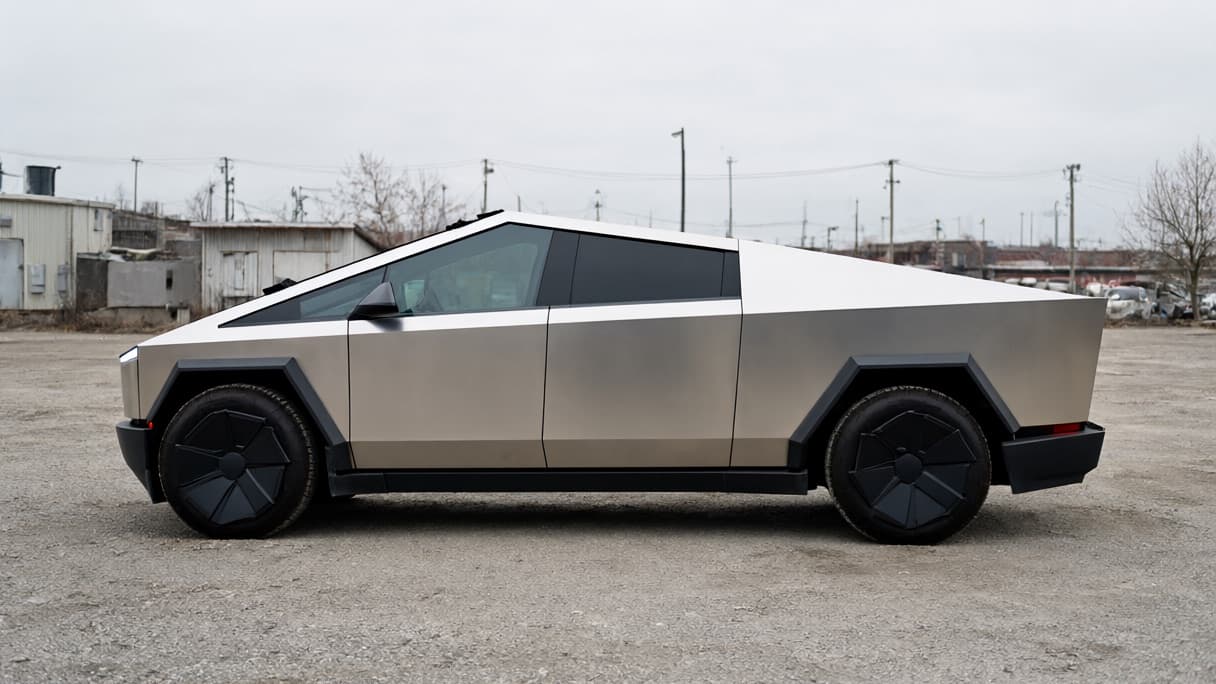
AI-generated image · Bay Street Wire
Elon Musk's 'low-poly technological nightmare' is being wound down after failing to meet basic utility tests and becoming a rolling liability for its creator.
### The Death of a Low-Poly Dream
It happened not with a bang, but with a tweet. On November 6, 2026, at 1:30 AM, the Cybertruck effectively met its end. In a move described by *The Verge* as a humiliating conclusion for a vehicle once positioned as the pinnacle of Tesla's engineering, Elon Musk announced—as *The Verge* first reported—that the company would be winding down production of the pickup next year. The goal is to clear the way for the Cybercab.
For those of us who track hardware, the Cybertruck was always an anomaly. It wasn't designed to be a tool; it was designed to be a statement. Musk once claimed during a 2019 earnings call that the Cybertruck was Tesla's "best product ever," though he notably prefaced that boast by admitting he could be "totally out to lunch." Looking at the wreckage of the product's lifecycle, it appears he was.
### A Failure of Utility
When you strip away the viral PR and the *Blade Runner*-inspired aesthetics, the Cybertruck failed the most basic test of any vehicle: utility. While it was marketed as a powerhouse—purportedly faster than a Porsche 911 and more powerful than an F-150—the reality on the road told a different story.
According to reporting from *The Verge*, the vehicle collapsed under the weight of its own hubris. The failures were systemic. It was too expensive for its target market, and it failed to deliver on the range and towing power that had been promised. Then there were the recalls, which plagued the rollout, and the lingering, comical absurdity of its oversized windshield wiper—a design flaw that Musk himself admitted had "no easy solution."
These weren't just growing pains; they were fundamental flaws in a product that prioritized a "low-poly" aesthetic over actual automotive functionality. The Cybertruck wasn't a truck; it was a rolling sculpture that happened to have wheels.
### The Numbers Don't Lie
Tesla's internal expectations for the vehicle were staggering, but the actual market demand was a fraction of those hopes. According to *The Verge*, Tesla had anticipated a market demand and production volume of 250,000 units annually. In reality, the company sold only 70,000 units in total.
To mask this failure and make the numbers look better on paper, Musk resorted to a desperate corporate maneuver: he used his other company, SpaceX, as one of the largest single purchasers of the trucks to absorb the unsold inventory. When the CEO has to become his own primary customer just to move product, the venture is no longer a business success—it's a vanity project.
### The Brand Liability
While the hardware was flawed, the Cybertruck's ultimate demise was tied to the brand of the man who built it. Because the vehicle was so inseparable from Elon Musk, it became a physical avatar for his personal and political trajectory.
As Musk tied himself to the MAGA brand and took a prominent role in the Trump administration as the head of the DOGE project, the truck shifted from a piece of tech to a political statement. *The Verge* notes that while owners of the Model 3 or Model Y could distance themselves from Musk's recent actions, Cybertruck owners could not. The vehicle became a "rolling liability."
For a period, the truck found a niche among those looking to "own the libs," with owners applying Trump wraps and using the vehicles as props at conservative rallies. However, the political tide turned. Musk poured over $445 million into Republican races, focusing heavily on Texas—the home of both Tesla and SpaceX. His spending in Texas exceeded $200 million, which included nearly $35 million from his America PAC and $168 million funneled into super PACs for Republican Senate candidate Ken Paxton.
Despite this massive financial investment, the results were a total flop. Democrat James Talarico defeated Paxton by 12 points, ending a 38-year Democratic Senate drought, and Gina Hinojosa ousted Greg Abbott from the governor's mansion. As Texas turned blue, the Cybertruck—a monument to Musk's refusal to accept human feedback—became an emblem of a failed era.
### Final Thoughts: Opinion
In my view, the Cybertruck was never meant to be a viable vehicle. It was a piece of performance art designed to disrupt for the sake of disruption. But in the hardware world, disruption without utility is just a failure. When you build a product that ignores the needs of the user in favor of the ego of the creator, you don't get a revolution—you get a 70,000-unit footnote in automotive history. The Cybertruck didn't die because of a shift in the EV market; it died because it forgot that a truck is supposed to be a tool, not a trophy.