
The Privatized Dragnet: Why Local Governments Are Purging Flock Safety

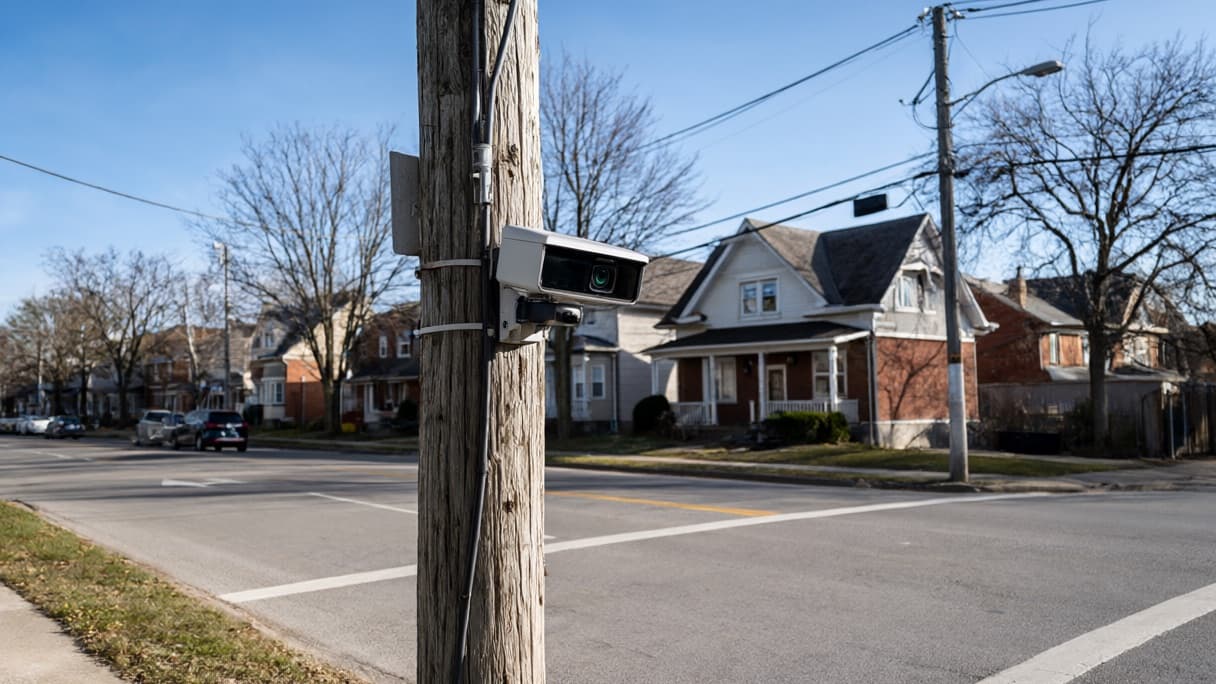
AI-generated image · Bay Street Wire
From stalking scandals to unauthorized federal access, cities are realizing that 'crime-fighting' telemetry comes with a permanent, unaccountable surveillance tax.
For years, the pitch for Flock Safety has been simple: a high-tech toolkit to find missing persons and stolen cars. But as the hardware—license plate readers, drones, and gunshot-detection microphones—proliferates across the U.S., the reality is shifting from a targeted tool to a permanent, privatized surveillance dragnet. Now, the tide is turning.
As first reported by TechCrunch, at least 10 police departments and local governments have taken steps since this summer to curb, restrict, or end their use of Flock technology. Among the cities moving to terminate their contracts are Lansing, Michigan; Richmond, Virginia; Newburgh, New York; Monroe, Ohio; and the Massachusetts towns of Hopkinton and New Bedford. Additionally, police in Grafton and East Bridgewater, Massachusetts, announced plans to stop using the cameras, while residents of League City, Texas, recently voted against continuing the use of the license plate readers.
**Opinion: The Illusion of Control**
From a defender's mindset, the most alarming aspect of the Flock ecosystem isn't just the presence of the cameras, but the opacity of the telemetry. While Flock claims in a statement to TechCrunch that customers own their data and that the company does not sell data or hold a contract with ICE, the actual operational history suggests a different story. When Ithaca, New York, passed a resolution to terminate its contract in March, the city cited proven instances of federal agents using Flock infrastructure without specific local authorization. The resolution further alleged that Flock, through negligence or intent, allowed the Bureau of Alcohol, Tobacco, Firearms and Explosives (ATF) and U.S. Immigration and Customs Enforcement (ICE) to use ALPR database query results to investigate and persecute immigrants.
**The Human Cost of Unchecked Access**
When you give a private company the keys to a city's movement data, you create a honeypot for abuse. TechCrunch reports two harrowing examples of this: in August, a Brentwood, Missouri, officer was accused of using Flock to stalk his ex-wife during a divorce, and in September, an officer from East Texas was sentenced to prison for using the system to stalk his ex-girlfriend and her family.
These aren't just 'glitches'; they are the inevitable result of deploying mass surveillance with zero accountability. As Adam Schwartz of the Electronic Frontier Foundation told TechCrunch, these systems are often deployed by police departments with little city council oversight. In South Windsor, Connecticut, cameras went live last year without a public vote or warning, leading the town to vote for their removal in October.
**A Growing Resistance**
Local governments are finally waking up to the fact that they can function without these privatized eyes. In September, the cameras were abandoned by the El Paso County Sheriff’s Office in Colorado. Sheriff Joseph Roybal stated in a press release that the county possesses the training and tools to apprehend criminals without relying on Flock.
While Flock has attempted to mitigate concerns by shortening the default data storage period from 30 days to seven for new customers and requiring case codes for searches, the damage to public trust is systemic. As Tatiana Rice of The Future of Privacy Forum told TechCrunch, these cameras are tangible embodiments of a broader resentment toward emerging technology and the invisible selling of personal data. Whether it is Florida barring license plate readers from state highways or Texas pausing state funding for Flock, the message is clear: the convenience of a privatized dragnet is no longer worth the loss of privacy.