
The Haas Powder Keg: Why the Ocon-Hirakawa Swap is a Signal of Chaos, Not Strategy

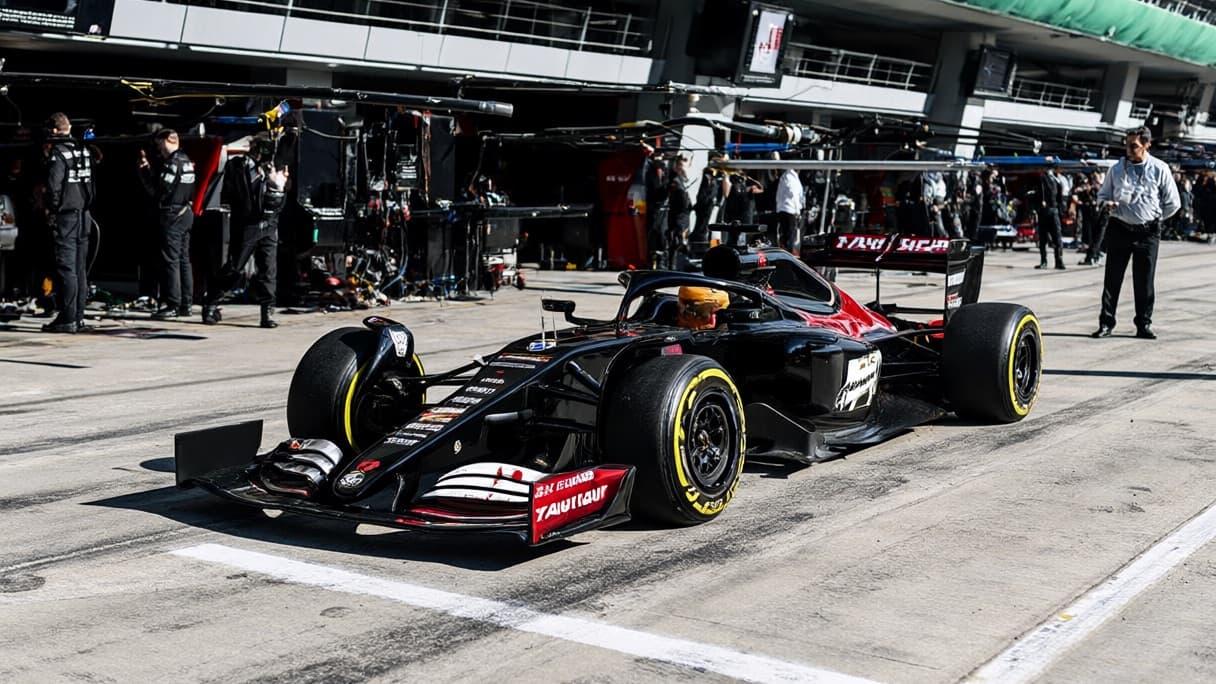
AI-generated image · Bay Street Wire
Opinion: Replacing a veteran with a debutant mid-weekend without explanation suggests a garage in turmoil rather than a calculated pivot.
Let’s be clear: what we are witnessing in Mexico City isn't a masterstroke of talent management. It is a frantic, mid-weekend scramble that smells of internal combustion.
As I write this, the paddock is buzzing with the news, as Sportsnet first reported, that Haas has abruptly decided to hand Ryo Hirakawa his Formula 1 race debut this Sunday. The move comes at the expense of veteran Esteban Ocon, who is being sidelined for third practice, qualifying, and the race itself.
In my view, this is not a strategic pivot. It is a chaotic admission that the Haas garage has become a powder keg.
To understand the gravity of this, one must look at the timing. We are not talking about a driver change made during the off-season or even a substitution made on a Thursday morning. This is a rare, sudden shift occurring part-way through a Grand Prix weekend. According to Sportsnet, Hirakawa had already completed first practice on Friday in Ocon's car—a move that appeared, at the time, to be a routine fulfillment of F1 requirements regarding track time for non-regular drivers.
But then the hammer dropped on Saturday. Suddenly, the Japanese driver, a former Le Mans 24-hour race winner for Toyota, isn't just a practice filler; he is the replacement for the remainder of the event, partnering with Oliver Bearman.
What makes this particularly galling is the void of communication. Sportsnet reports that Haas has offered no explanation for the change, other than a brief confirmation that Ocon was not being replaced due to illness. While other drivers, such as championship leader Kimi Antonelli, have been unwell this week, Haas has explicitly ruled out health as the catalyst for Ocon's exit.
When a team removes a veteran driver mid-weekend and refuses to provide a reason, they aren't managing a driver; they are managing a crisis.
Esteban Ocon is a 30-year-old professional with a victory to his name from 2021. He is a driver who has already navigated the precarious nature of the sport, having been released early by Alpine in 2024 to make room for Jack Doohan at the Abu Dhabi Grand Prix before his move to Haas. Ocon has made it clear he intends to remain in Formula 1, even if it means serving as a reserve for another outfit.
Yet, here he is, effectively exiled from his own seat in Mexico. The optics are disastrous. By inserting Hirakawa—who clocked the 15th-fastest time in Friday's first practice, while Ocon managed 13th-fastest in the second session—Haas is betting on a debutant over a proven winner in the heat of a race weekend.
This isn't about performance metrics. If it were, Ocon's slight edge in the second practice session would suggest stability. Instead, this feels like a breaking point. Haas has already looked toward the future, signing Formula 2 leader Rafael Câmara for next season, and Ocon is already slated to leave the team after two years. But there is a professional standard to how these transitions are handled. Dumping a driver on a Saturday is not a transition; it is a demolition.
Furthermore, the lack of clarity regarding the future only adds to the instability. Sportsnet notes that Haas has left it open as to who will occupy the seat next week in Brazil, the first of the final four races of the season. This suggests a team operating on a moment-to-moment basis, reacting to internal frictions rather than following a roadmap.
If Haas believes that Hirakawa is the answer, why wait until Saturday to make the call? If Ocon is no longer desired in the cockpit, why allow him to participate in the first two practice sessions? The inconsistency is the story.
In the high-pressure environment of the F1 paddock, stability is the currency of success. By creating this vacuum of information and executing a sudden driver swap, Haas has signaled to the world—and likely to their own engineers—that the internal environment is volatile.
We are seeing a garage that has lost its grip on the narrative. Whether this is a result of a breakdown in the relationship between Ocon and team leadership or a sudden shift in corporate direction, the result is the same: a chaotic atmosphere that serves no one.
As Hirakawa prepares for his debut and Ocon watches from the sidelines, the real story isn't the potential of the newcomer. It is the instability of the team. Haas isn't playing a long game here; they are playing a game of fire-fighting, and in doing so, they have turned their garage into a powder keg.