
The Great Decoupling: AMD's Gaming Crater and the New Hardware Order

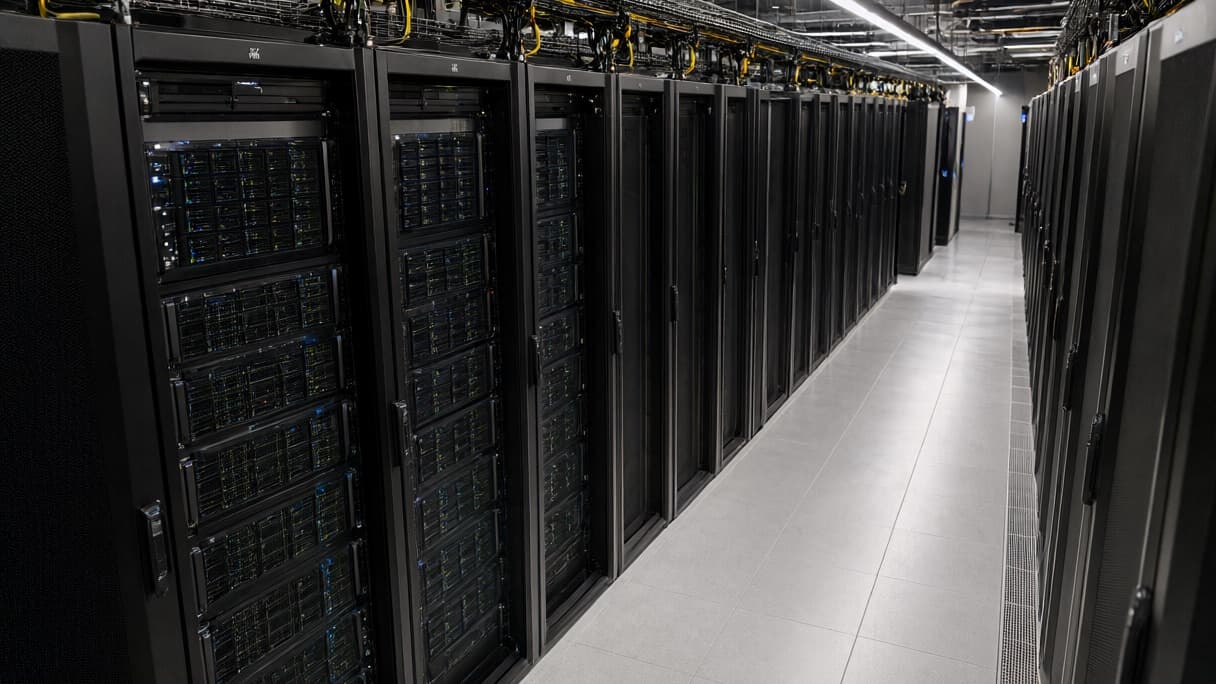
AI-generated image · Bay Street Wire
While data center growth pushes AMD toward a historic revenue milestone, a 40 percent collapse in gaming revenue signals a dangerous shift in the console cycle.
### The Divergence of Growth
On the surface, AMD is experiencing a golden era. As Ars Technica first reported, the company recently posted a record third-quarter revenue of $13.4 billion, marking a 45 percent increase year over year. The momentum is so significant that AMD CFO Jean Hu provided fourth-quarter guidance projecting revenue of approximately $17 billion (plus or minus 3%).
If these projections hold, the industry is witnessing a seismic shift in the competitive landscape. Ars Technica notes that Intel’s own Q4 guidance estimates revenue between $15 billion and $16 billion. If both firms meet these expectations, it would mark the first time in history that AMD's revenue surpasses that of Intel.
However, this record-breaking trajectory is not uniform. The growth is being driven by a massive divergence between the enterprise world and the living room. While the data center segment surged 97 percent year over year to a record $8.5 billion, the gaming segment didn't just dip—it cratered.
### The Gaming Crater
AMD's gaming revenue fell by 40 percent, plummeting to $773 million. In the eyes of the company, this is a predictable outcome of the current hardware lifecycle. AMD Chair and CEO Lisa Su attributed the decline primarily to lower semi-custom sales, noting that this is expected at this specific stage of the console cycle.
To understand the gravity of this drop, one must look at how AMD categorizes its business. As Ars Technica clarifies, the gaming segment is composed of the Radeon graphics business and the semi-custom processors AMD supplies to console manufacturers. Notably, the Ryzen processors often found in gaming PCs are categorized under the "Client" business—which grew to $2.95 billion in revenue, a 7 percent increase year over year, driven by Ryzen mobile chips.
This leaves the semi-custom and graphics side of the house in a precarious position. While AMD did not provide a specific breakdown between PC graphics card sales and console chip sales, the 40 percent revenue collapse suggests a decoupling. The hardware cycle for consoles is slowing down, but the software and AI demand in the enterprise sector is accelerating at a rate that dwarfs the gaming market's contributions.
### The AI Pivot
As gaming falters, AMD is aggressively pivoting its resources toward the AI and data center boom. The company's data center operating margins expanded from 25 percent to 34 percent, with operating income surging 168 percent to $2.88 billion. This growth is fueled by the EPYC line of enterprise server CPUs and the launch of the Instinct MI450 series GPUs.
CEO Lisa Su highlighted the scale of this adoption during a recent call, stating that AMD began shipping the MI455X in volume during the quarter. The client list for these technologies reads like a directory of the AI era: Microsoft, Meta, OpenAI, Anthropic, and Oracle have all brought their first Helios racks online.
AMD is also pushing the boundaries of local AI processing. The company announced the AMD Threadripper Halo Station, first showcased at IFA in September, which pairs a Threadripper 9995WX CPU with up to four Instinct MI350P GPUs. Slated for a 2027 release, this system is designed to run trillion-parameter LLMs locally.
Furthermore, AMD is targeting developers with "Project Zenith," a Windows-based experience on the PRO 400 Series platform. This effort utilizes the Ryzen AI Max+ PRO 495 processor, which supports up to 192GB of unified system memory (with 160GB available for graphics) and can run 300 billion-parameter models at 4-bit quantization.
### The Strategic Warning
(Opinion) The disparity between AMD's data center success and its gaming failure is more than a quarterly anomaly; it is a warning sign. For years, the "console wars" were fought on the basis of hardware iterations. But as AMD's gaming revenue craters by nearly half, it becomes clear that the hardware cycle is decoupling from the software demand.
When the semi-custom business—the heartbeat of the console ecosystem—drops this sharply, it suggests that the traditional cadence of console upgrades is no longer a reliable engine for growth. AMD is not ignoring this; they are simply outgrowing it. By diversifying into aerospace, defense, automotive, and industrial markets—which helped the Embedded segment grow 29 percent to $1.1 billion—AMD is insulating itself from the volatility of the gaming market.
If the gaming segment continues to shrink while the data center business doubles, the "console war" may cease to be a primary driver of AMD's corporate strategy. The company is no longer just a gaming chip provider; it is an AI infrastructure giant that happens to make console processors. The question for the industry is whether the console market can innovate fast enough to remain relevant in a hardware cycle now dominated by trillion-parameter models and enterprise server racks.