
The 'Full-Stack' Mirage: Is Age-Tech Solving the Housing Crisis or Just Serving the Elite?

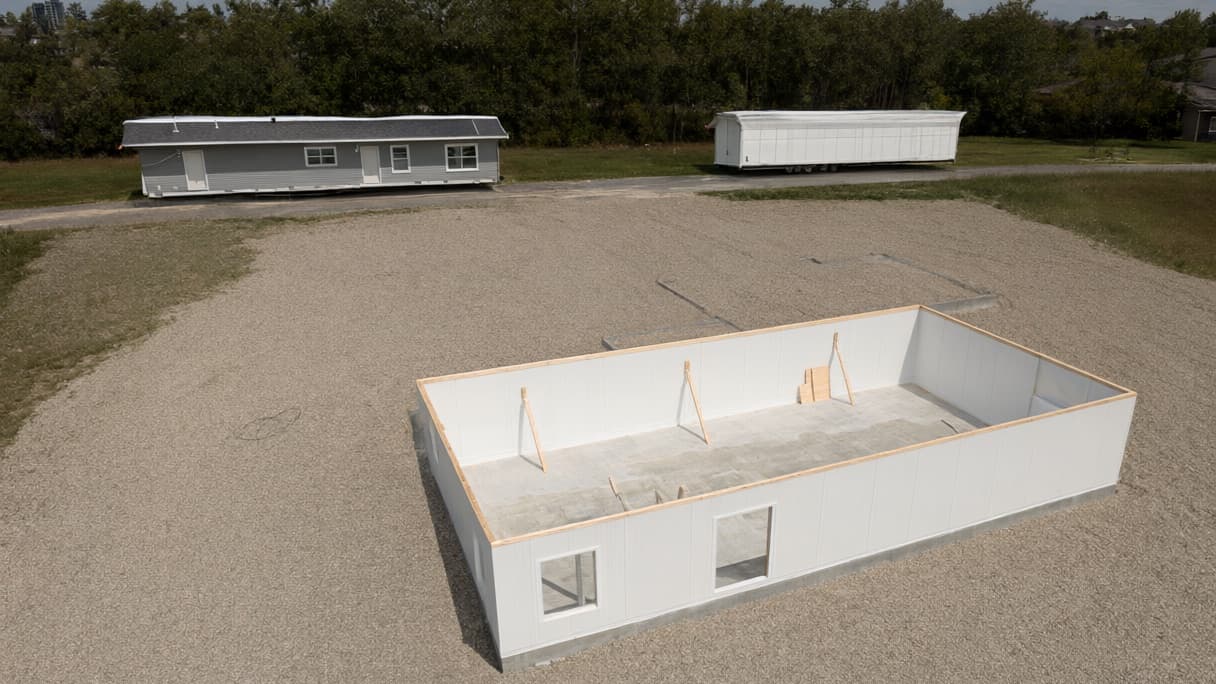
AI-generated image · Bay Street Wire
Opinion: While Garden Loft promises a tech-driven revolution in senior living, the gap between high-end modular luxury and systemic accessibility remains wide.
In the current tech lexicon, 'age-tech' is the latest frontier. It is marketed as a panacea for the precarious balance seniors must strike between a desire for independence and the physical limitations of aging. But as we see these innovations emerge, we must ask: are we solving a systemic housing crisis, or are we simply building high-tech gated communities for those who can afford the entry fee?
Take, for example, Garden Loft. Founded in 2022 by University of Calgary dean of architecture John Brown, his wife Carina van Olm Brown, and Matthew North, the company positions itself as the 'Tesla of housing,' as BetaKit first reported. According to BetaKit, Garden Loft builds modular, prefabricated suites designed for seniors and people with differing abilities. These are not mere homes; Brown describes them as the 'world's first full-stack house,' integrating technology deeply into the physical structure.
On paper, the features are impressive. BetaKit reports that these suites include injury-resistant flooring designed to dampen fall impacts by up to 43 percent, alongside a proprietary digital platform that monitors 37 different data streams. From gait speed and stability to hydration and toilet use, an algorithm tracks these metrics to provide early warning signals of health decline, color-coded from green to yellow.
But this is where the 'full-stack' promise begins to fray. While the technology is dazzling, the systemic reality of senior care is often defined by a lack of resources. BetaKit notes that assisted living facilities are frequently underfunded and in-home care is prohibitively expensive for many. When we frame a luxury modular home as a 'solution' to this crisis, we risk ignoring the millions of seniors who cannot afford a designer prefab suite, regardless of how many data streams it monitors.
Furthermore, the 'full-stack' approach introduces significant concerns regarding surveillance and privacy. While John Brown told BetaKit that residents retain agency over their data and can choose what to share with family or healthcare providers, the company's privacy framework has been vague. Brown admitted to BetaKit that the company is still 'working right now around data privacy,' later clarifying that data would be stored on private, domestically located servers and not sold. For a product that monitors the most intimate details of a person's daily existence—including bathroom habits—'working on it' is a precarious stance.
Innovation is necessary, but we must be careful not to confuse a high-end product with a systemic solution. If the future of aging is a series of teak-wood finished, sensor-laden pods available only to a privileged few, then 'age-tech' isn't disrupting the housing crisis—it's just decorating it. True inclusion in tech means creating systems that lift the floor for everyone, not just raising the ceiling for those who can already afford the view.