
The Discount Pivot: Loblaw’s New Strategy is a Confession of Economic Failure

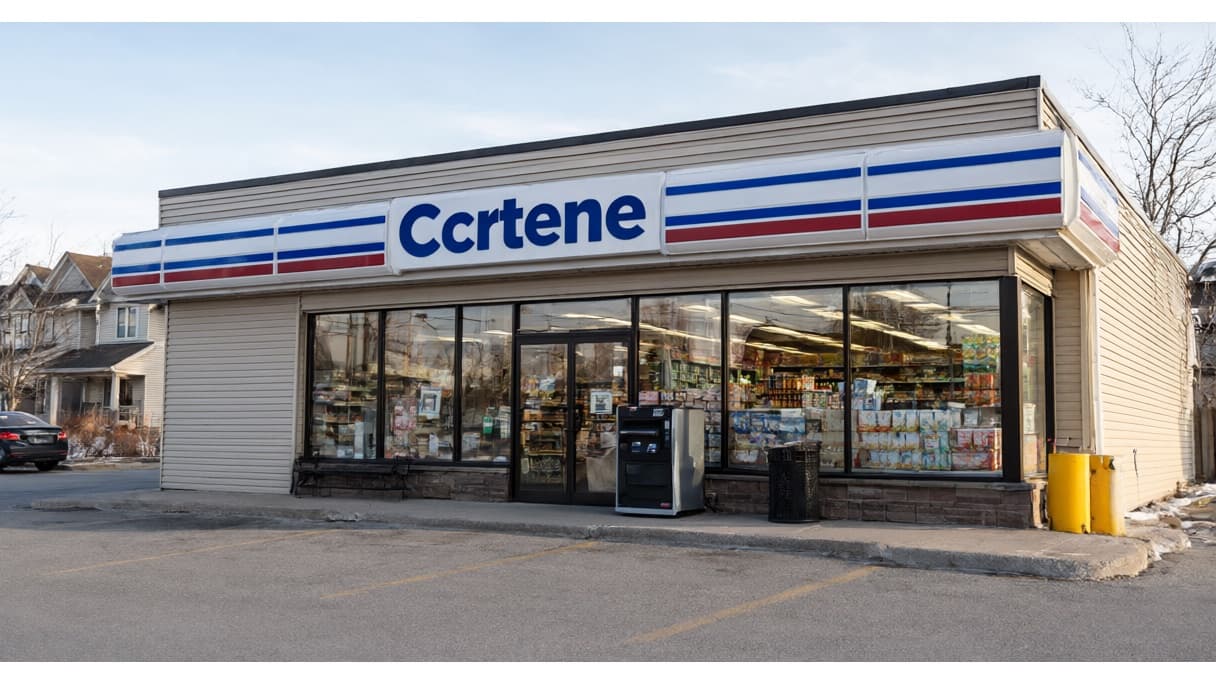
AI-generated image · Bay Street Wire
Opinion: Per Bank’s push for small-format discount stores isn't just a business pivot—it's a loud admission that the middle-class grocery budget is officially broken.
Let’s be clear: when the country's largest grocery chain decides that the future of its business is the 'discount bin,' it isn't a victory for the consumer. It is a white flag.
In a recent interview with CityNews Toronto, as the outlet first reported, Loblaw Cos. Ltd. CEO Per Bank laid out a vision for the company that should alarm anyone still clinging to the hope of a return to economic normalcy. Bank revealed an intentional strategy to aggressively expand small-format discount stores—the kind of stripped-down outlets that ditch the deli counters, fresh bakeries, and live pizza stations in favor of narrow aisles and house-brand staples.
According to CityNews Toronto, Loblaw has already grown its fleet of stores under 20,000 square feet from 43 when Bank took the helm to more than 75 today. But the real tell is where he's going. Bank stated that he believes discount stores will eventually make up more than half of the company's food business.
For the uninitiated, we aren't talking about a slight shift in pricing. We are talking about a fundamental restructuring of how Canadians eat. When a company pivots so heavily toward discount banners—which currently represent about 40 percent of its grocery footprint—it is responding to a consumer base that can no longer afford the 'conventional' experience offered by Loblaws, Fortinos, or Real Canadian Superstore.
Bank attributes this shift to a series of 'economic shocks' that have hammered household budgets: pandemic-era food inflation, an energy crisis fueled by war in the Middle East, and a tariff dispute following the return of Donald Trump to the White House. He even noted that diesel prices, driven by war in Iran, have led some suppliers to request price hikes as high as 15 percent.
While Bank frames this as staying 'really, really competitive,' it feels more like a managed retreat. The middle class is being ushered out of the full-service grocery store and into 5,000-product 'corner store' versions of No Frills. The 'value' being offered isn't a bonus; it's a survival mechanism for a population pushed to the brink.
It is also telling that this pivot comes while Loblaw continues to struggle with a toxic public image. Monica LaBarge, an assistant professor at Queen’s University, cited a 2026 Great Canadian Brand Index survey where Loblaw was ranked last among 130 Canadian brands. Between the bread price-fixing scandal and the 'LoblawIsOutofControl' Reddit boycott, the company has become the face of consumer anguish.
Bank argues that grocers take the heat for price hikes driven by multinational suppliers like P&G, Unilever, and Nestlé. He may be right that the retailer is the easy target, but the strategy remains the same: shrink the store, cut the amenities, and lean into the discount.
If the goal is to win over 'price-weary shoppers,' Bank has found his answer. But let’s call it what it is. This isn't a savvy expansion into new markets—it's a loud admission that the traditional grocery budget is dead, and we're all just shopping for the scraps.