
The Basement of Rock Bottom: Why Waymo is a Threat to Toronto's Working Class

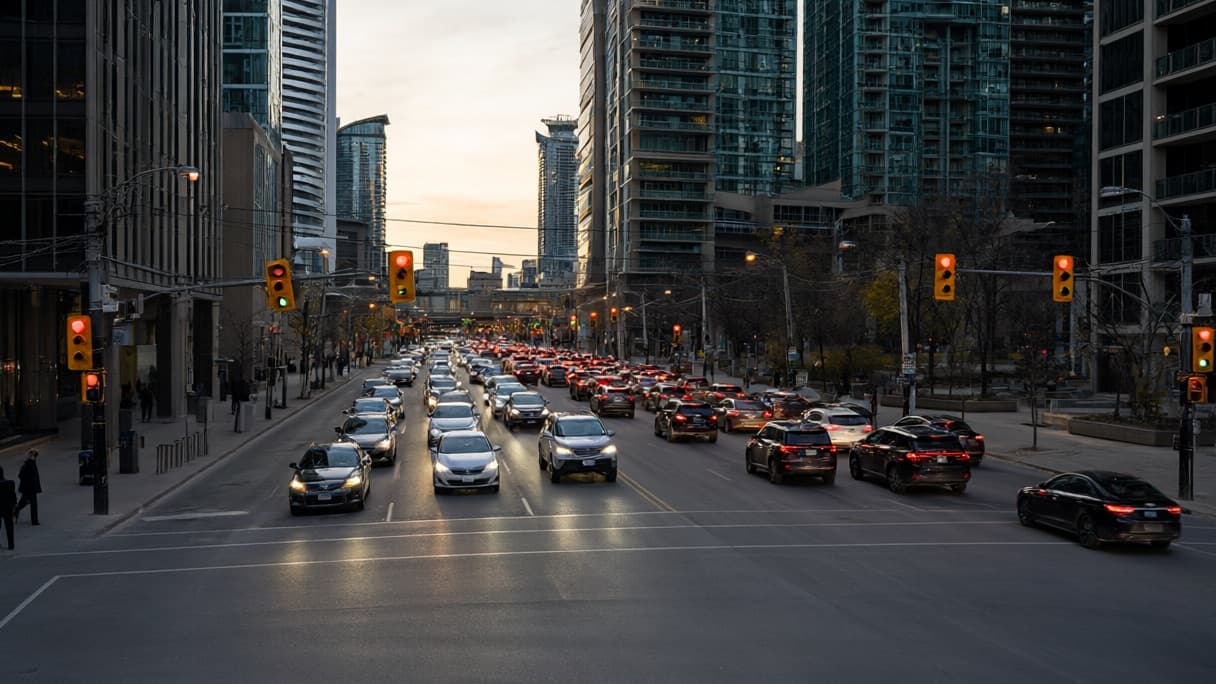
AI-generated image · Bay Street Wire
Opinion: Waymo's push into the Canadian market isn't just a tech milestone—it's a direct assault on the livelihoods of thousands of precarious gig workers.
For the thousands of drivers navigating the streets of Toronto, the gig economy has already felt like a race to the bottom. Now, a new player is arriving to ensure that 'rock bottom' has a basement.
Waymo, the driverless ride-hailing company, has announced plans to begin testing in Toronto with a projected launch in 2028, as CBC Toronto first reported. While tech enthusiasts may see this as an innovative leap in transit, for the people actually behind the wheel, it is a looming economic catastrophe. This isn't just a software update for the city's transportation; it is an attempt to automate away the paychecks of a vulnerable workforce.
A 2024 city report indicates that by the end of that year, Toronto had over 80,000 licensed drivers for private-transportation-vehicles (PTC). This figure only accounts for ride-hailing apps like Lyft and Uber, excluding the thousands of additional taxi and limousine license holders. These workers are already struggling in a hyper-competitive market. George Wedge, president of the Rideshare Drivers Association of Ontario and a former Uber driver, describes the current state of the industry as having already hit "rock bottom."
Waymo's entry threatens to turn that struggle into total displacement. Wedge argues that for every single Waymo vehicle deployed, one to three rideshare drivers could lose their gainful employment. This is not a shift in how work is done; it is an absolute replacement of the worker.
Waymo attempts to soften this blow by claiming it will hire "hundreds" of local employees for operations, customer service, and fleet management. A company spokesperson told CBC News that these roles could be filled by current taxi and ride-hailing drivers, citing a similar partnership with Lyft in Nashville. But we have heard these promises before. Kristine Hubbard, managing director of Beck Taxi, reminds us that when Uber first entered Toronto, they promised well-paying jobs and a reduction in the number of vehicles on the road. Instead, as Hubbard notes, all they did was add more vehicles to the streets while a billion-dollar U.S. company claimed ownership of the roads.
We don't have to guess about the impact of robotaxis; we can look at the U.S. market. Bhupendra Chouhan, co-chair of the Atlanta Rideshare Drivers Union and an Uber driver for five years, reports a stark decline in pay since 2023. He identifies Waymo's 2025 entry into the Atlanta market as one of the hardest hits the industry has faced, estimating his own ridership dropped by 20 to 30 per cent over the last year.
Chouhan’s experience is a warning. He notes that currently, it is a "free for all" where driverless cars can enter markets "fast and furious" as long as testing is completed. He expresses regret that drivers weren't warned, stating he would have fought for protective legislation had he known the impact.
Ontario is already paving the way. The province launched a pilot for automated vehicles 10 years ago to support innovation, and by 2019, the requirement to have a driver in the seat was removed under certain conditions. While the government focuses on "innovation," the human cost is being ignored.
Automation should not come at the expense of the working class. If Waymo is allowed to roll out without protections for the drivers it intends to replace, Toronto isn't just embracing the future—it's abandoning its workers.