
The 20 Million Ballot Failure: Why Elections Alberta's Resource Gap Betrayed the Democratic Process

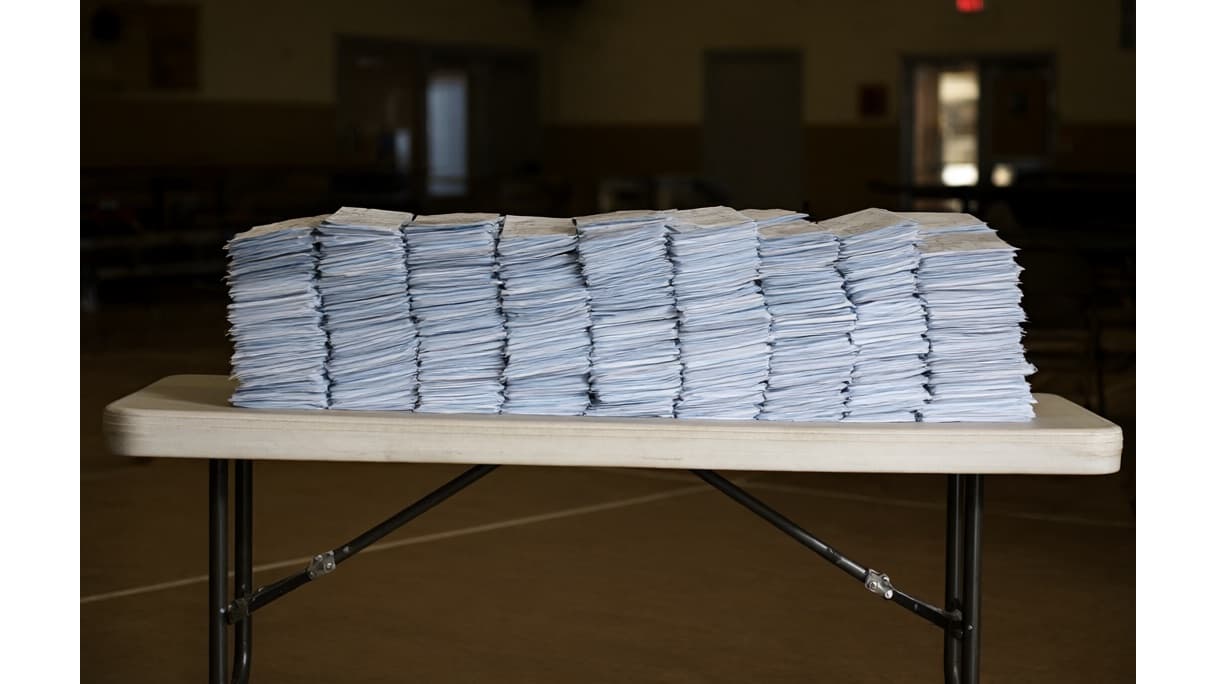
AI-generated image · Bay Street Wire
Opinion: By attempting to manage the largest vote count in Canadian history with a fraction of the necessary workforce and failing to prevent basic procedural errors, Elections Alberta didn't just miss a deadline—they exposed a systemic inability to scale.
The integrity of a democratic exercise is measured not only by the act of voting but by the efficiency and transparency of the count. In the wake of Alberta's historic referendum on immigration and constitutional issues, as CBC first reported, Elections Alberta has attempted to frame its performance as a success. However, a closer examination reveals a staggering disconnect between the agency's ambitions and its operational reality.
According to CBC, Elections Alberta processed more than 20 million ballots—a volume higher than any electoral event in Canadian history, including federal elections. Yet, despite this unprecedented task, the agency failed to meet its own legislative deadlines for reporting unofficial results.
The failure was systemic. In an interview with CBC, spokesperson Michelle Gurney compared the Alberta effort to federal elections, which utilize approximately 211,000 workers. In contrast, Elections Alberta strove for 60,000. Attempting to manage a larger volume of ballots than a federal election with less than a third of the workforce is not a matter of efficiency; it is a matter of mathematical impossibility.
This resource gap directly impacted the timeline. While Gurney claimed the unofficial count was completed by Saturday night and special ballots by Thursday, Oct. 22, the agency acknowledged that it failed to meet the original 48-hour window for reporting unofficial results.
Beyond manpower, the count was plagued by "procedural errors." CBC reports that legislation requires ballots to be reported by voting area rather than by voting place. In approximately seven voting places, officials ignored this, combining ballot boxes and forcing a retrospective sorting effort. In two instances, the volume was so high that separating them became impossible. Gurney admitted she had not spoken with personnel in those areas, speculating only that workers were "looking for efficiency."
Elections Alberta argues that because 80 electoral divisions had no issues, the process was largely successful. But in a referendum where 75 percent of Albertans voted to remain in Canada on the "big ticket" separation question, "mostly successful" is an unacceptable standard. The agency operated on a deficit of personnel and a lapse in procedural discipline. When an agency oversees the largest vote in Canadian history and fails to meet its own deadlines, it has not succeeded—it has barely survived.