
Opinion: The Tipping Point: AMD's Historic Q4 Projection Signals a New Era for PC Hardware

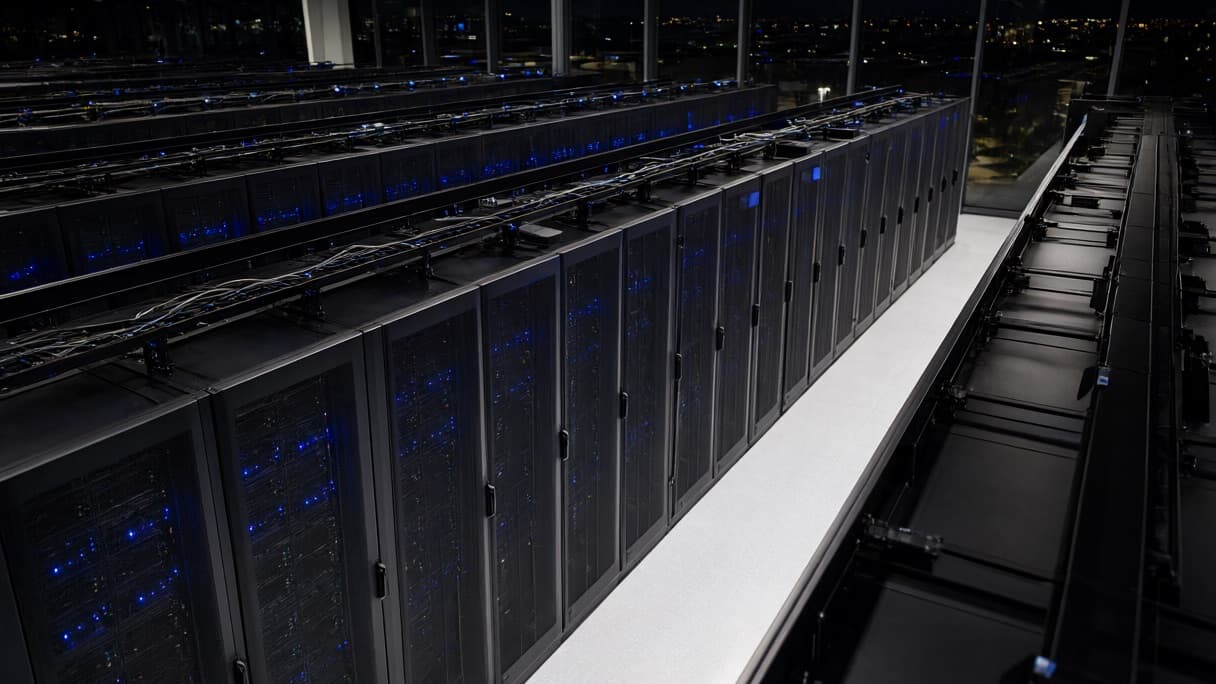
AI-generated image · Bay Street Wire
As AMD prepares to outsell Intel for the first time in history, the shift toward AI-driven data center dominance is rewriting the performance ceiling for the next generation of gaming and consumer systems.
For decades, the hierarchy of the PC hardware ecosystem has remained largely static, with Intel serving as the perennial benchmark for volume and revenue. However, as Tom's Hardware first reported, we are witnessing a fundamental pivot. AMD has issued guidance projecting Q4 revenue of approximately $17 billion—a figure that would see the company outsell Intel for the first time in its history.
While the headline focuses on the revenue flip, the underlying story is a total reconfiguration of where the industry's power resides. AMD is no longer just a competitor in the consumer space; it is becoming a data center powerhouse. Tom's Hardware reports that AMD's Data Center business now accounts for 64% of its total revenue, following a record Q3 performance where the unit generated $8.55 billion. This represents a 97% increase over the $4.34 billion earned in the same quarter a year prior.
This shift is being fueled by an aggressive AI expansion. AMD's growth is tied to the launch of Instinct MI455X AI accelerators and Helios rack-scale systems. The scale of this adoption is significant: Tom's Hardware notes that industry giants including Microsoft, Meta, OpenAI, Anthropic, and Oracle Cloud Infrastructure are already utilizing Helios systems for their workloads.
From a business perspective, the trajectory is steep. AMD expects Data Center revenue to climb from $8.55 billion in Q3 2026 to roughly $12.8 billion in Q4. Looking further ahead, CEO and Chairman Lisa Su stated during an earnings call that the company expects server revenue to double year-over-year in 2027. Su further projected that data center AI revenue will grow even faster than previous estimates, eventually pushing the Data Center unit's contribution to over 80% of total company sales by 2027.
However, this ascent comes amid a volatile environment for the traditional gaming and consumer PC markets. Tom's Hardware reports that AMD's Client and Gaming business unit saw revenue drop to $3.722 billion, an 8% year-over-year decline. The gaming segment specifically—which encompasses discrete Radeon RX GPUs and system-on-chips (SoCs) for consoles—plummeted to $773 million from $1.298 billion the previous year. This was driven by weaker Radeon GPU sales and reduced SoC purchases from Sony and Microsoft.
Despite these headwinds, the strategic pivot toward high-performance AI hardware creates a new ceiling for what gaming PCs can eventually achieve. While AMD projects a double-digit percentage decline in PC market unit shipments for 2027, Lisa Su indicated that the company intends to outperform the market by focusing on desktop processors, premium consumer segments, and enterprise solutions.
In the immediate term, the consumer market remains 'ugly,' with desktop CPU shipments cratering by 20% due to high component costs. Yet, AMD is gaining record share in this environment. The company's overall financial health is surging; Tom's Hardware reports that AMD's Q3 revenue reached $13.377 billion, with net income jumping 95% to $2.43 billion and diluted earnings per share rising to $1.46 from $0.75 a year ago.
As AMD moves toward a future where the vast majority of its revenue is derived from AI and server infrastructure, the ripple effects will inevitably flow down to the consumer. The massive investment in Instinct accelerators and Epyc processors isn't just a corporate win; it is the foundation for the next generation of interactive performance. By redefining the hardware ceiling at the data center level, AMD is positioning itself to dictate the terms of the next era of computing, regardless of the current volatility in the console and discrete GPU markets.