
Google's Aura Pricing Strategy: A Calculated Move to Commoditize XR Hardware

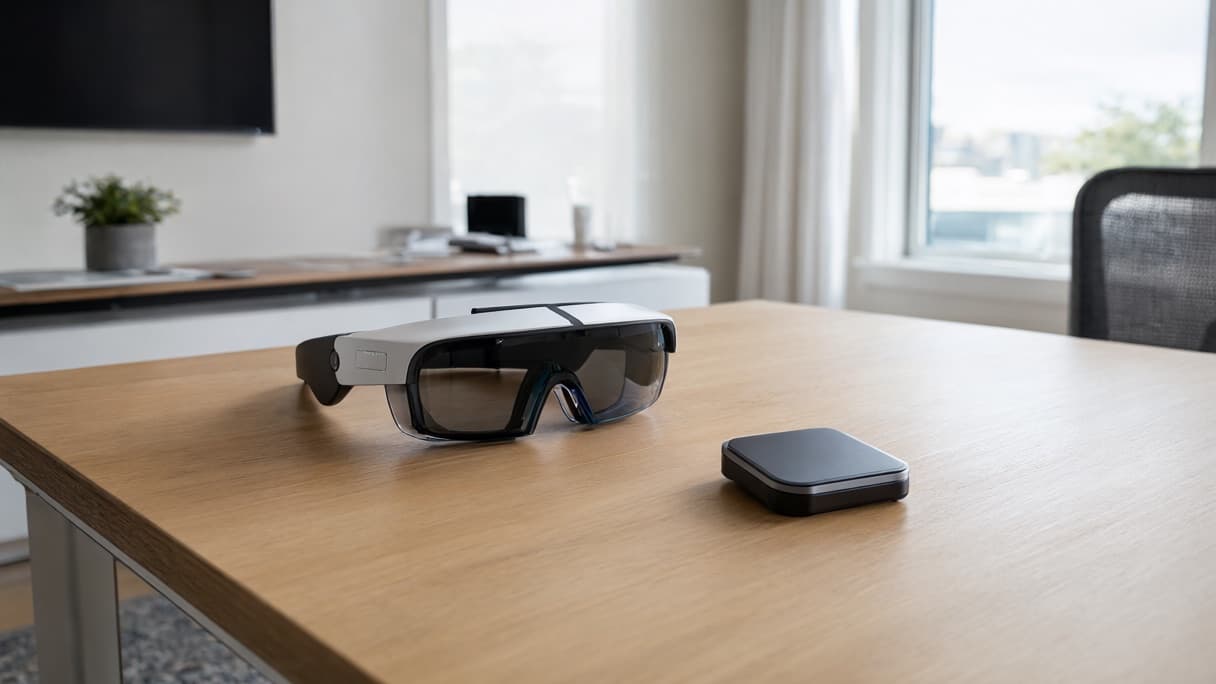
AI-generated image · Bay Street Wire
By slashing the price of the Xreal Aura glasses just as they hit the market, Google is signaling a shift toward winning the software war by undercutting Meta's ecosystem.
In the creator economy and media tech space, the battle for the next computing platform is rarely about the hardware margins—it is about who controls the software layer. As first reported by The Verge, Google's recent pricing maneuver with the Xreal Aura glasses is a textbook example of this strategy.
According to reporting from The Verge, the Google Xreal Aura—a 95-gram pair of glasses featuring a tethered Android XR compute puck—has debuted at a price point of $1,099 through the end of the year. This represents a $180 price drop from the $1,279 figure Xreal had previously charged for preorders.
**Opinion:** This aggressive price cut is a calculated play. By pricing the Aura below the Meta VR Glasses, Google is attempting to commoditize the XR hardware layer. The goal isn't necessarily to make a massive profit on the glasses themselves, but to undercut Meta's ecosystem and drive adoption of the Android XR platform. If Google can make the hardware an affordable entry point, they win the long-term software war by establishing where the apps, AI integrations, and creator tools live.
Beyond the pricing, the hardware offers a 70-degree diagonal field of view and allows users to mirror computers or handheld consoles via a USB-C compute puck. Google is leaning heavily into its software strengths, integrating Gemini AI to analyze what the user sees and launching a spatial gallery update for Google Photos that allows users to navigate their libraries in 3D.
As reported by The Verge, the device launches with over 150 "made-for-XR experiences," including immersive films such as *Galapagos: the Last Eden* and Andy Serkis’ *Nevatars*. To further bolster the ecosystem, Xreal is partnering with GameSir to release a wireless gamepad featuring a dedicated Gemini key, alongside a folding portable wireless keyboard.
Availability is currently focused on the US, Canada, and South Korea, with a launch in Japan on November 2nd and broader availability slated for next year. The $1,099 price point applies to the 12GB RAM and 256GB storage model, while a higher-tier 16GB and 512GB model is available for $1,299. Ralph Jodice, a spokesperson and GM at Xreal, told The Verge that customers who preordered at the original higher price will receive automatic refunds for the difference.