
Fervo's $12B Order Book Signals Geothermal's Shift to Infrastructure Scale

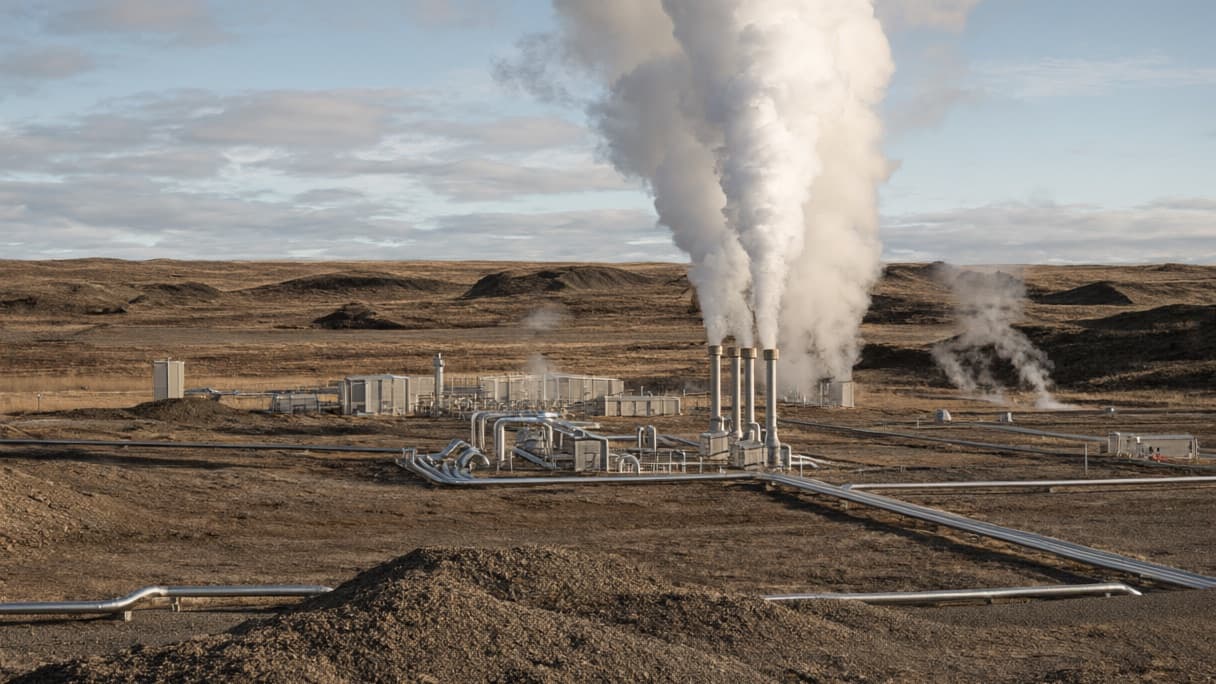
AI-generated image · Bay Street Wire
With contracted revenue surging and costs dropping, Fervo is positioning geothermal as a viable, phased alternative to natural gas for AI hyperscalers.
From a deals perspective, Fervo is attempting to transition geothermal energy from a venture-backed speculative play into a scalable infrastructure asset. As TechCrunch first reported, the company revealed in its third-quarter earnings report that its contracted revenue has climbed to $11.9 billion, a significant jump from the $7.2 billion reported in the previous quarter.
Central to this growth is Fervo's relationship with Google. The company is currently on track to complete a 396 megawatt power plant for the tech giant by the end of 2028. This grid-connected project has been named Cape Google 400. Fervo co-founder and CEO Tim Latimer explained during a Monday earnings call that this structure allows Google to draw power as needed or sell excess capacity to other customers, ensuring that the development of the power plant and any potential data center can proceed on independent schedules.
Fervo is leveraging a modular construction strategy to compete with traditional baseload power sources like natural gas and nuclear. The company utilizes "GeoBlocks"—clusters of deeper, hotter wells capable of generating 15 megawatts of gross power each. While the first completed GeoBlock produced 33 megawatts, more recent iterations have reached 50 megawatts. These blocks are specifically sized to meet the power demands of a typical data center hall, allowing hyperscalers to activate capacity in phases rather than waiting for a massive plant to be fully completed.
***
**Owen's Take:** The critical metric here isn't just the order book, but the trajectory of the capital expenditure. Fervo is positioning geothermal as a legitimate hedge against the volatility of natural gas. While the technology is still chasing price parity, the downward trend in installation costs suggests a path toward infrastructure-scale viability.
***
Financial data provided by TechCrunch shows that Fervo is aggressively reducing its cost per kilowatt. The first phase of the Cape Station project in Utah cost $7,000 per kilowatt; the Google project has reduced that figure to $5,500. Fervo has set an ambitious long-term target of $3,000 per kilowatt, which the outlet notes would allow the company to significantly undercut current natural gas pricing.
Currently, with subsidies, Fervo's $5,500 per kilowatt cost is roughly equivalent to a new natural gas plant using fuel priced at $6 per million BTUs—approximately double the current market price of natural gas. However, the scale of the Cape Station resource is substantial; while experts previously estimated the site could produce 4 gigawatts, Fervo now believes it can generate 8.4 gigawatts. Fervo already connected its first 100 megawatt plant to the grid earlier this year.
Despite the revenue pipeline, Fervo remains in an early growth stage. TechCrunch reports that the company ended the quarter with an operating loss of $43.7 million. However, its balance sheet remains robust with $1.9 billion in cash and cash equivalents against $301.6 million in long-term debt.