
Data Gap: Niagara's $360 Million Flood Loss Clashes With Provincial Aid Denial

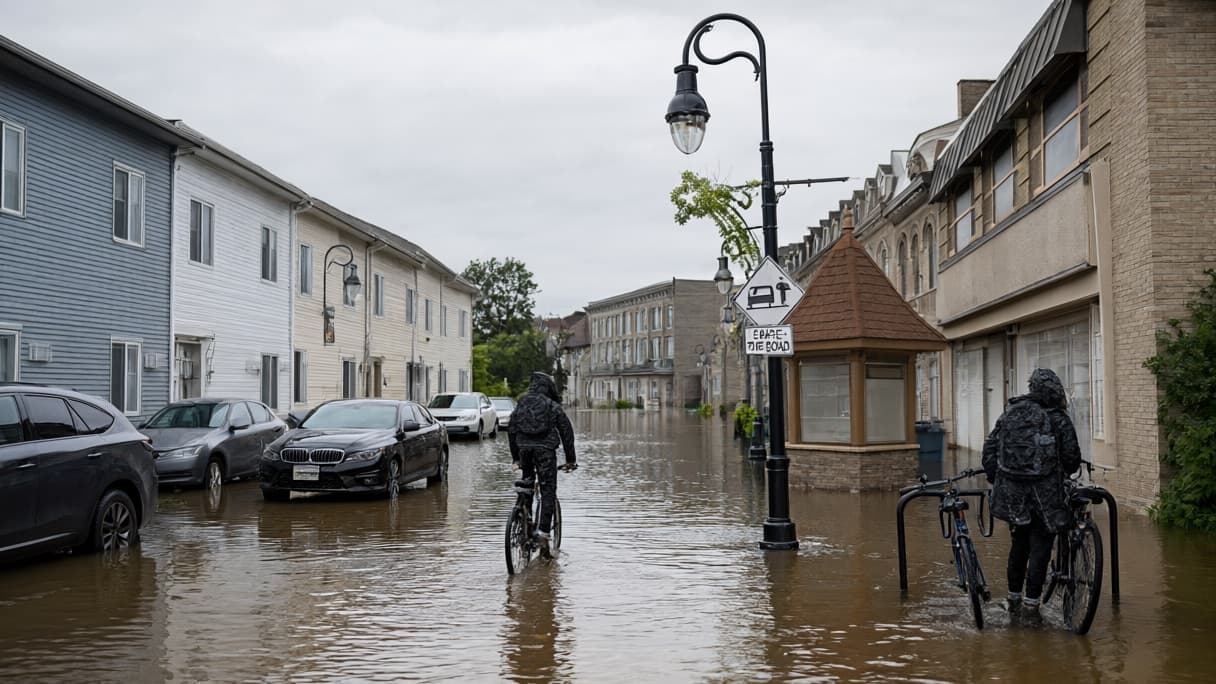
AI-generated image · Bay Street Wire · Based on a photo by Municipal Affairs and Housing (CC BY 2.0, Wikimedia Commons)
While Catastrophe Indices and Quantification Inc. estimates massive losses from summer storms, the Ontario government maintains that 'sewer backups' disqualify Niagara residents from disaster relief.
As CBC News first reported, a stark disparity between estimated disaster losses and government eligibility criteria has left thousands of Niagara residents in financial and psychological limbo following devastating summer floods.
**The Damage Data** Toronto-based Catastrophe Indices and Quantification Inc. estimated that flooding in Niagara caused $360 million in damages. This contributed to a broader national trend; the Insurance Bureau of Canada reported on Oct. 22 that insured losses from natural disasters across Canada over the summer reached approximately $3.7 billion, marking the third costliest summer in history for severe weather losses.
**The Eligibility Conflict** St. Catharines riding MPP Jennie Stevens has demanded the activation of the Disaster Recovery Assistance for Ontarians (DRAO) program, which provides up to $250,000 for emergency expenses and property replacement. Stevens cited confirmation from an Environment and Climate Change Canada meteorologist that July storms caused flash flooding, a claim supported by the City of St. Catharines.
However, Municipal Affairs and Housing Minister Rob Flack rejected the demands during question period at Queen's Park. Flack stated the program was not activated because the events were "sewer backups" rather than "overland water," asserting that residents must rely on private insurance.
**The Human Cost** A survey of nearly 450 homeowners conducted by the Northend Neighbours online group reveals the scale of the struggle: * **Claim Status:** Over 60 percent of flooded residents remain "in limbo" regarding insurance claims. * **Approval Rates:** Only 36.6 percent of respondents—of whom 97 percent were flooded—have had claims fully approved. * **Severity:** 70 percent of those flooded described damage as "severe or catastrophic."
Survey organizer Daya Lye told CBC News that the uncertainty has led to widespread psychological distress, with respondents reporting feelings of PTSD, trauma, and despair, and one individual describing themselves as "suicidal."